
Active sensing + automatic stabilization in one wearable.
Diaprobe integrates multi-modal sensing with neuromuscular stimulation to measure venous return dynamics and respond to early instability during hemodialysis.
System overview
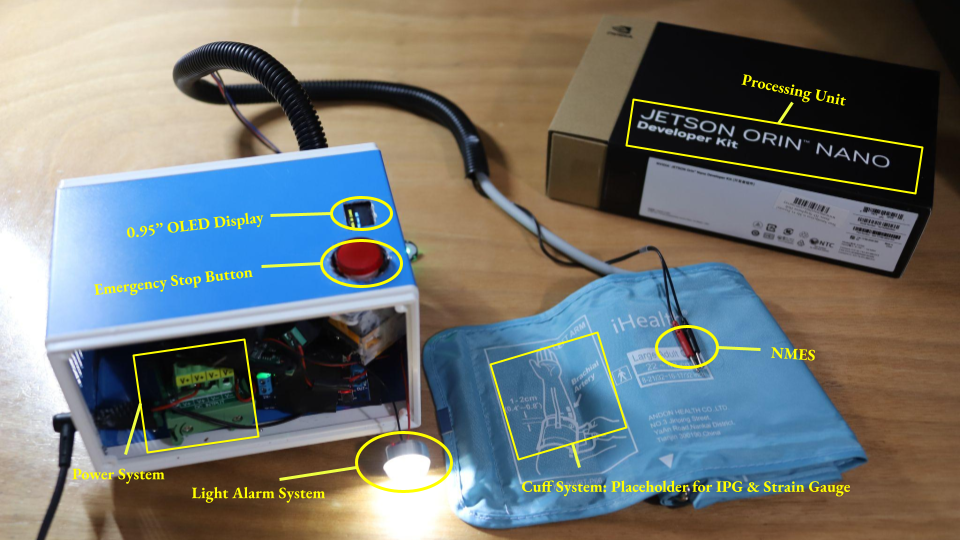
A single-wrap neoprene calf sleeve houses optical and mechanical sensing and delivers stimulation through integrated electrodes. The goal is rapid placement, consistent indexing, and reliable signal quality in a real dialysis environment.
Anatomically indexed sleeve
High-speed on-device processing
Closed-loop workflow
The system is designed around an "active sensing" phase that periodically probes venous return via an imperceptible NMES "ping," and a stabilization phase that delivers therapeutic stimulation when early decompensation signatures appear.
1) Active sensing
- Sub-threshold NMES pulse to gastrocnemius (“ping”)
- Venous return echo captured
- Reserve estimate updated
2) Decision
- Fusion filters artifacts
- False-alarm budget enforced
- Triggers only when needed
3) Stabilization
- Therapeutic NMES support
- Venous return augmented
- MAP trend protected
Multi-modal sensing
Diaprobe is designed to combine optical and mechanical measures so a leg-worn device can retain clinically useful fidelity even in the presence of motion and stimulation artifacts.
Reflective PPG
Strain + impedance
Dominance Wrapper AI
The sensor-fusion logic is designed to cross-reference optical and mechanical channels and suppress stimulation noise and movement artifacts. The result is a more reliable trigger signal, helping reduce alarm fatigue.
Design intent
- Artifact rejection tailored to leg-worn sensing
- Cross-check rules to prevent spurious triggers
- Strict false-alarm budget support
- On-device inference for latency control
Safety design
Stimulation intensity, duty cycles, and trigger behavior are designed to align with clinical oversight and conservative alerting. Safety features are defined and validated through formal risk management and clinical protocols.